
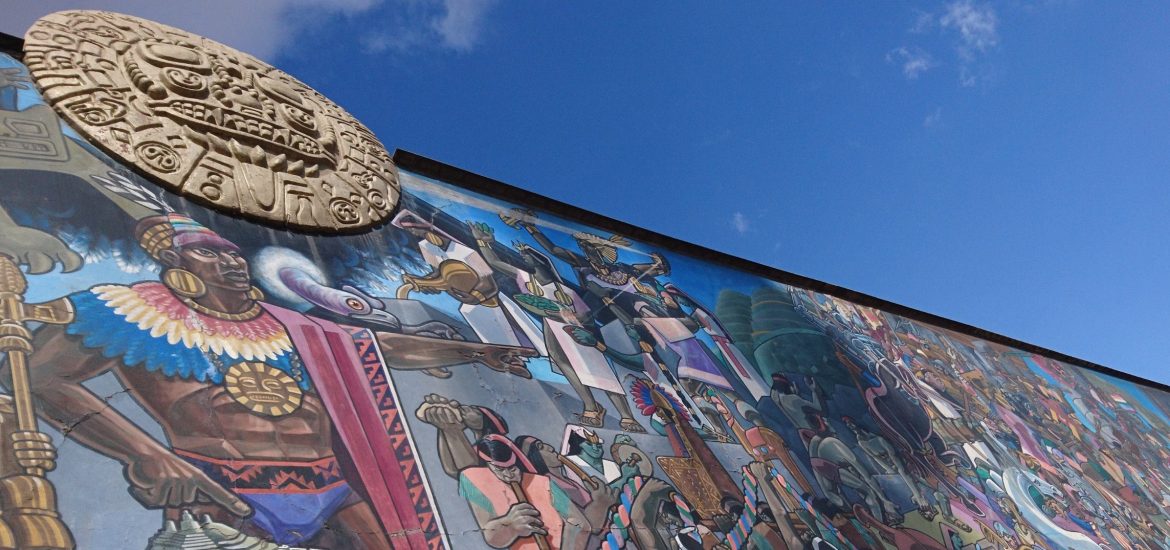
As time is flying by faster then we expected, our journey in Peru is slowly coming to an end. After about 6 weeks we were ready to experience our last destination which is one of the most famous places in Peru, the capital of the Inca Empire: Cusco.
The city of Cuzco
With its elevation around 3,400 meters (!) Cuzco is the highest city we have been so far. When we arrived with another quite bumpy overnight bus from Arequipa, we had to get acclimatized again. 🚌⛰️ The weather was also a new challenge, as it was quite cold and wet due to the starting rainy season. ☔
Cusco or “Qosqo”, its original name in Quechua, is known for its archeological remains and colonial architecture. Taking a stroll around the city center, we found a lot of arcades and beautiful carved wooden balconies, as well as many Incan wall ruins.
UNESCO listed Cusco as a World Heritage Site with the title “City of Cuzco” in 1983. Crucial to this decision was not only the city itself but also the sourroundings offering so much more to explore. That is why Cusco is a major tourist destination now, hosting nearly 2 million visitors a year! And two of them were we! 😅 Yes again we felt the most touristic parts of Peru and the North seemed so unreal around here.
After getting to know the city by ourself and with a free walking tour, it was time for us to explore all the exciting parts of its surrounding. Sacred valley here we come!
Maras and Moray

Our first trip brought us to Maras and Moray. But first we made a stop at a small village to get a muña tea. This tea is made of a mint-like Peruvian herb. It helps greatly against altitude sickness and acts in a different way then the widely used coca tea.
We also learned about the alpaca wool manufacturing. A traditionally dressed woman showed us how they manually color the wool with natural ingredients in order to get all the colorful nice and soft alpaca sweaters, ponchos and all the other clothings. 👕🧤🧦🧥🧣
After this short intermezzo we reached Moray, an archeological site in the northwest of Cusco. It is located on a high plateau which contains unusual Inca ruins: Several terraced circular depressions, the largest of which is approximately 30 meters deep. As with many other Inca sites, it also has an irrigation system. The full purpose of these terraces is still unknown. However it is believed that the ruins once were an agricultural laboratory. Because of the different conditions on each level, temperatures can vary up to 15° C. It is thought that the Incas used it to test crops and experiment with the different micro climates.


Maras or “Salineras de Maras” features salt pans that are still used exactly as they were at the time of the Incas. Unfortunately since 2019 the owning company announced that tourists are no longer allowed to walk around the salt ponds due to contamination. But the view from the top over the large several hundred ancient terraced ponds is still incredible.

After these great first impressions we were looking forward to head deeper into the Andes. Adventure time with even higher altitudes! 😁🏔️⛰️

